Buy liart.eu ?
We are moving the project
liart.eu .
Are you interested in purchasing the domain
liart.eu ?
domain@kv-gmbh.de · 0541-91531010
Buy liart.eu ?
What are confidence intervals?
Confidence intervals are a range of values that are used to estimate the true value of a population parameter, such as the mean or proportion. They provide a measure of the uncertainty or variability in the estimate, and are typically expressed as a range of values with a specified level of confidence, such as 95% or 99%. Confidence intervals are calculated using sample data and statistical methods, and are used to make inferences about the population parameter being estimated. They are a useful tool for understanding the precision and reliability of an estimate, and for comparing different groups or treatments in a study. **
What are real number intervals?
Real number intervals are continuous sets of real numbers that lie between two specified values. They can be open intervals, which do not include the endpoint values, or closed intervals, which include the endpoint values. Real number intervals are commonly represented using interval notation, such as (a, b) for an open interval or [a, b] for a closed interval. These intervals are used in mathematics to describe ranges of values or solutions to equations. **


Similar search terms for Intervals
Top-Angebote
Products related to Intervals:
-
Sesderma Reti Age 5 Liposomal Serum Anti-Aging Innovation 30mLA facial serum for wrinkles and signs of ageing. Reduces wrinkles and fine lines. Hydrates and strengthens barrier. Restores youthful radiance. 5-Retinoid System: smooths wrinkles, accelerates renewal, and boosts collagen. Biomimetic Peptides: fill expression lines by stimulating collagen synthesis.54,51 £*Shipping: 5,34 £Secure redirect to the provider
-
HARPERCOLLINS Creative Confidence by Tom & David Kelley – Unleashing Your Creative Potential & Innovation MindsetA powerful and inspiring book from the founders of IDEO, the award-winning design firm, on unleashing the creativity that lies within each and every one of us. Too often, companies and individuals assume that creativity and innovation are the domain of the ‘creative types’. But two of the foremost experts in innovation, design and creativity on the planet show us that each and every one of us is creative. In an entertaining and inspiring narrative that draws on countless stories from their work at IDEO, and with many of the world's top companies and design firms, David and Tom Kelley identify the principles and strategies that will allow us to tap into our creative potential in our work lives, and in our personal lives, allow us to think outside the box in terms of how we approach and solve problems. ‘Creative Confidence’ is a book that will help each of us be more productive and successful in our lives and in our careers.4,95 £*Shipping: 1,99 £Secure redirect to the provider



-
How can one remember intervals?
One way to remember intervals is to associate them with familiar songs or melodies. For example, a perfect fourth interval is the first two notes of "Here Comes the Bride." Another method is to visualize the distance between the notes on a piano or other instrument. Practice playing and listening to intervals regularly to reinforce your memory of them. Additionally, using mnemonic devices or creating flashcards with interval names and examples can help solidify your understanding and retention of intervals. **
-
How do you hear intervals?
Intervals are heard by recognizing the distance between two notes in terms of pitch. This can be done by comparing the two notes and identifying whether the second note is higher, lower, or the same pitch as the first note. The quality of the interval (such as major, minor, perfect, etc.) can also be determined by listening to the specific sound created by the two notes played together. Training your ear through practice and exposure to different intervals can help in accurately identifying and hearing intervals. **
-
Wanted: Explanation of music intervals.
Music intervals are the distance between two pitches. They are named based on the number of letter names they encompass, such as a second, third, fourth, etc. Intervals can be classified as either harmonic (played simultaneously) or melodic (played consecutively). Understanding intervals is crucial in music theory as they help musicians identify and create melodies, harmonies, and chords. **
-
How intense are music intervals?
Music intervals can vary in intensity depending on their size and the context in which they are used. Smaller intervals, such as minor and major seconds, can create a sense of tension and dissonance, while larger intervals, such as perfect fifths and octaves, can create a feeling of stability and resolution. The intensity of music intervals is also influenced by factors such as dynamics, articulation, and the overall musical texture. Ultimately, the intensity of music intervals is subjective and can be perceived differently by different listeners. **

What are intervals in mathematics?
In mathematics, an interval is a set of real numbers with the property that any number that lies between two numbers in the set is also included in the set. Intervals can be open, closed, or a combination of both, and they can be bounded or unbounded. For example, the interval [a, b] includes all real numbers x such that a ≤ x ≤ b, while the interval (a, b) includes all real numbers x such that a < x < b. Intervals are used in various mathematical contexts, such as in calculus, analysis, and inequalities. **
How can one reduce measurement data in Excel from 15-minute intervals to hourly intervals?
To reduce measurement data in Excel from 15-minute intervals to hourly intervals, you can use the AVERAGE function. First, create a new column next to your original data. Then, use the AVERAGE function to calculate the average value for every four 15-minute intervals to get the hourly average. Drag the formula down to apply it to all the data points, and you will have your data reduced to hourly intervals. **
Top-Angebote
Products related to Intervals:
-
Uplifted Finds The Control Circle Archetype Social Worker Empowerment Canvas Executive Office & Wellness Sanctuary Decor 13 X 18 Cm No Frame"Inaugurate a grounding ""MindfulnessSanctuary"" energy in your environment with our ""Control Circle"" Archetype Canvas. This premium Social Worker and Mental Health professional print is the ultimate designer solution for creating a ""ClinicalModern"" or..."41,97 $*Shipping: 0,00 $Secure redirect to the provider
-
Our Voices: Neighborhood & Community Boxed SetFoster a feeling of belonging while building key reading skills with these colorful storybooks that spotlight a variety of neighborhoods and communities. The 10 charming stories feature characters from different cultural backgrounds who learn about...30,59 $*Shipping: 0,00 $Secure redirect to the provider
-
Sesderma Reti Age 5 Liposomal Serum Anti-Aging Innovation 30mLA facial serum for wrinkles and signs of ageing. Reduces wrinkles and fine lines. Hydrates and strengthens barrier. Restores youthful radiance. 5-Retinoid System: smooths wrinkles, accelerates renewal, and boosts collagen. Biomimetic Peptides: fill expression lines by stimulating collagen synthesis.54,51 £*Shipping: 5,34 £Secure redirect to the provider
-
What are confidence intervals?
Confidence intervals are a range of values that are used to estimate the true value of a population parameter, such as the mean or proportion. They provide a measure of the uncertainty or variability in the estimate, and are typically expressed as a range of values with a specified level of confidence, such as 95% or 99%. Confidence intervals are calculated using sample data and statistical methods, and are used to make inferences about the population parameter being estimated. They are a useful tool for understanding the precision and reliability of an estimate, and for comparing different groups or treatments in a study. **
-
What are real number intervals?
Real number intervals are continuous sets of real numbers that lie between two specified values. They can be open intervals, which do not include the endpoint values, or closed intervals, which include the endpoint values. Real number intervals are commonly represented using interval notation, such as (a, b) for an open interval or [a, b] for a closed interval. These intervals are used in mathematics to describe ranges of values or solutions to equations. **
-
How can one remember intervals?
One way to remember intervals is to associate them with familiar songs or melodies. For example, a perfect fourth interval is the first two notes of "Here Comes the Bride." Another method is to visualize the distance between the notes on a piano or other instrument. Practice playing and listening to intervals regularly to reinforce your memory of them. Additionally, using mnemonic devices or creating flashcards with interval names and examples can help solidify your understanding and retention of intervals. **
-
How do you hear intervals?
Intervals are heard by recognizing the distance between two notes in terms of pitch. This can be done by comparing the two notes and identifying whether the second note is higher, lower, or the same pitch as the first note. The quality of the interval (such as major, minor, perfect, etc.) can also be determined by listening to the specific sound created by the two notes played together. Training your ear through practice and exposure to different intervals can help in accurately identifying and hearing intervals. **
Similar search terms for Intervals
-
HARPERCOLLINS Creative Confidence by Tom & David Kelley – Unleashing Your Creative Potential & Innovation MindsetA powerful and inspiring book from the founders of IDEO, the award-winning design firm, on unleashing the creativity that lies within each and every one of us. Too often, companies and individuals assume that creativity and innovation are the domain of the ‘creative types’. But two of the foremost experts in innovation, design and creativity on the planet show us that each and every one of us is creative. In an entertaining and inspiring narrative that draws on countless stories from their work at IDEO, and with many of the world's top companies and design firms, David and Tom Kelley identify the principles and strategies that will allow us to tap into our creative potential in our work lives, and in our personal lives, allow us to think outside the box in terms of how we approach and solve problems. ‘Creative Confidence’ is a book that will help each of us be more productive and successful in our lives and in our careers.4,95 £*Shipping: 1,99 £Secure redirect to the provider
-
Helena Rubinstein Powercell Skinmunity anti-wrinkle eye treatment to refresh tired eyes innovation 15 mlHelena Rubinstein Powercell Skinmunity, 15 ml, Eye Creams and Gels for Women, The eye area is a highly sensitive area, as the skin there is exceptionally thin and fragile, making it more susceptible to signs of fatigue and ageing. It therefore also requires special treatment with ingredients and consistencies designed exactly for its needs. The Helena Rubinstein Powercell Skinmunity eye cream takes care of specific issues in the eye area. It delivers the nourishment and hydration needed for the skin around your eyes, improving its quality and restoring its vitality and a fresh, rested look. Characteristics: smooths wrinkles and fine lines refreshes and softens the eye area makes your eyes look youthful How to use: In the morning and/or evening, apply the product around the eye contours by dabbing lightly until fully absorbed.95,50 £*Shipping: 3,99 £Secure redirect to the provider
-
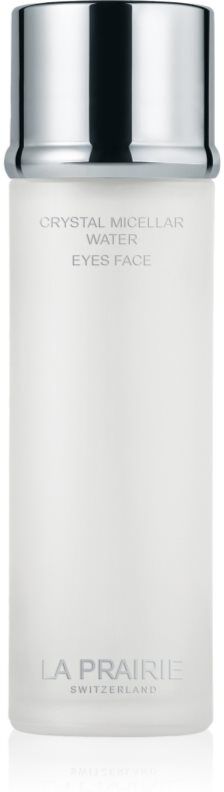
La Prairie Crystal Micellar Water makeup removing micellar water for face and eyes innovation 150 mlLa Prairie Crystal Micellar Water, 150 ml, Micellar Waters for Women, The La PrairieCrystal Micellar Water micellar water is enriched with tiny active particles that bind to any impurities and sebum on contact with the skin. Thanks to these particles, called micelles, this water ensures thorough foundation removal in a few minutes and without the need for pressure or friction on the skin. The micelles are so effective that they can handle even the most stubborn waterproof foundation. Characteristics: cleans pores deeply removes even stubborn makeup keeps skin balanced How to use: Apply enough of the product to a cotton wool pad and wipe gently to remove makeup and clean the skin. Use in the morning and evening or as needed. Shake well before use.127,00 £*Shipping: 3,99 £Secure redirect to the provider
-
Wanted: Explanation of music intervals.
Music intervals are the distance between two pitches. They are named based on the number of letter names they encompass, such as a second, third, fourth, etc. Intervals can be classified as either harmonic (played simultaneously) or melodic (played consecutively). Understanding intervals is crucial in music theory as they help musicians identify and create melodies, harmonies, and chords. **
-
How intense are music intervals?
Music intervals can vary in intensity depending on their size and the context in which they are used. Smaller intervals, such as minor and major seconds, can create a sense of tension and dissonance, while larger intervals, such as perfect fifths and octaves, can create a feeling of stability and resolution. The intensity of music intervals is also influenced by factors such as dynamics, articulation, and the overall musical texture. Ultimately, the intensity of music intervals is subjective and can be perceived differently by different listeners. **
-
What are intervals in mathematics?
In mathematics, an interval is a set of real numbers with the property that any number that lies between two numbers in the set is also included in the set. Intervals can be open, closed, or a combination of both, and they can be bounded or unbounded. For example, the interval [a, b] includes all real numbers x such that a ≤ x ≤ b, while the interval (a, b) includes all real numbers x such that a < x < b. Intervals are used in various mathematical contexts, such as in calculus, analysis, and inequalities. **
-
How can one reduce measurement data in Excel from 15-minute intervals to hourly intervals?
To reduce measurement data in Excel from 15-minute intervals to hourly intervals, you can use the AVERAGE function. First, create a new column next to your original data. Then, use the AVERAGE function to calculate the average value for every four 15-minute intervals to get the hourly average. Drag the formula down to apply it to all the data points, and you will have your data reduced to hourly intervals. **
* All prices are inclusive of VAT and, if applicable, plus shipping costs. The offer information is based on the details provided by the respective shop and is updated through automated processes. Real-time updates do not occur, so deviations can occur in individual cases. ** Note: Parts of this content were created by AI.