Buy liart.eu ?
We are moving the project
liart.eu .
Are you interested in purchasing the domain
liart.eu ?
domain@kv-gmbh.de · 0541-91531010
Buy liart.eu ?
What is the heat of vaporization in chemistry?
The heat of vaporization in chemistry is the amount of energy required to convert a liquid into a gas at its boiling point. It is a physical property of a substance and is typically measured in joules per mole or kilojoules per mole. The heat of vaporization is a crucial parameter in understanding the behavior of substances during phase changes and is used in various applications such as in the design of distillation processes and in calculating the energy requirements for vaporization. **
What is the enthalpy of vaporization of water?
The enthalpy of vaporization of water is the amount of energy required to convert one mole of liquid water at its boiling point into vapor at the same temperature. This value is approximately 40.7 kJ/mol at 100°C and 1 atm pressure. Enthalpy of vaporization is an important property of a substance and is used in various thermodynamic calculations and applications, such as in the design of heat exchangers and in the study of phase changes. **


Similar search terms for Vaporization
Top-Angebote
Products related to Vaporization:
-
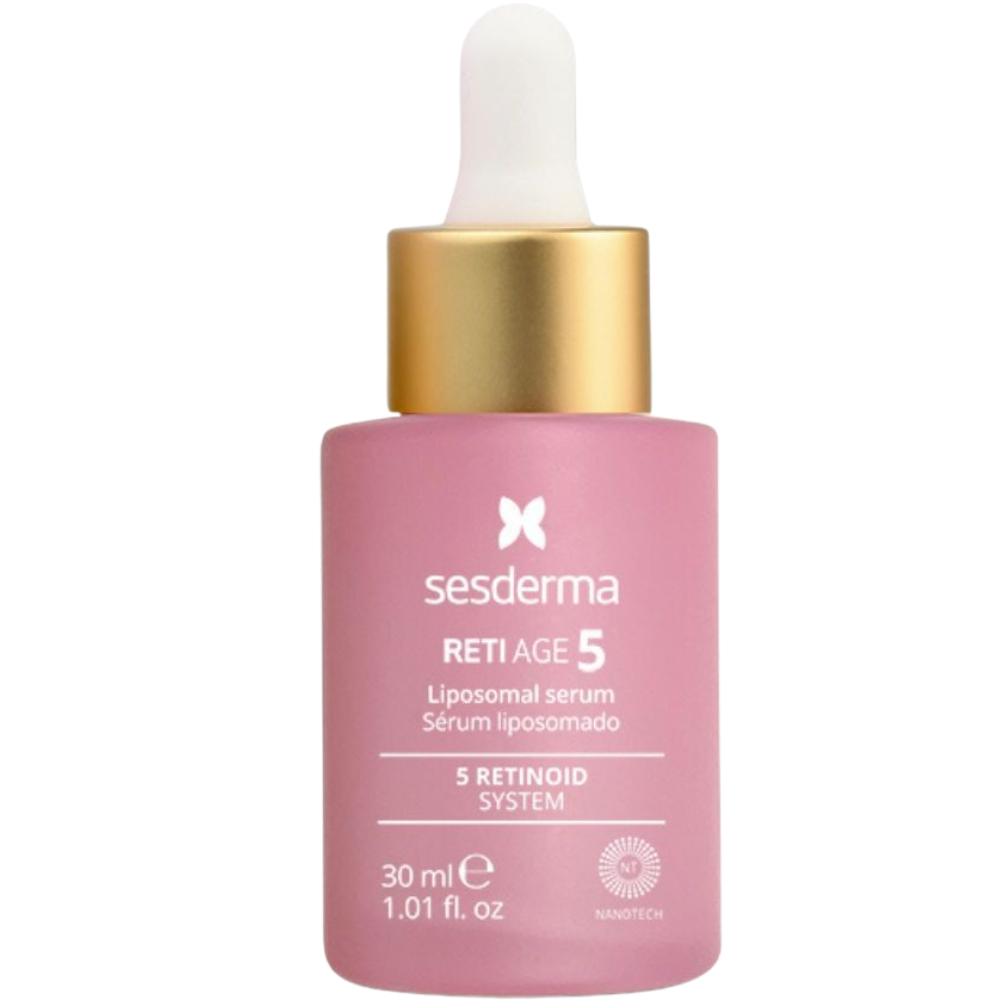
Sesderma Reti Age 5 Liposomal Serum Anti-Aging Innovation 30mLA facial serum for wrinkles and signs of ageing. Reduces wrinkles and fine lines. Hydrates and strengthens barrier. Restores youthful radiance. 5-Retinoid System: smooths wrinkles, accelerates renewal, and boosts collagen. Biomimetic Peptides: fill expression lines by stimulating collagen synthesis.54,51 £*Shipping: 5,34 £Secure redirect to the provider
-
HARPERCOLLINS Creative Confidence by Tom & David Kelley – Unleashing Your Creative Potential & Innovation MindsetA powerful and inspiring book from the founders of IDEO, the award-winning design firm, on unleashing the creativity that lies within each and every one of us. Too often, companies and individuals assume that creativity and innovation are the domain of the ‘creative types’. But two of the foremost experts in innovation, design and creativity on the planet show us that each and every one of us is creative. In an entertaining and inspiring narrative that draws on countless stories from their work at IDEO, and with many of the world's top companies and design firms, David and Tom Kelley identify the principles and strategies that will allow us to tap into our creative potential in our work lives, and in our personal lives, allow us to think outside the box in terms of how we approach and solve problems. ‘Creative Confidence’ is a book that will help each of us be more productive and successful in our lives and in our careers.4,95 £*Shipping: 1,99 £Secure redirect to the provider


-
What is the difference between boiling, evaporation, and vaporization?
Boiling is the rapid vaporization of a liquid when it is heated to its boiling point, occurring throughout the liquid. Evaporation, on the other hand, is the slow vaporization of a liquid at temperatures below its boiling point, happening only at the surface of the liquid. Vaporization is a general term that encompasses both boiling and evaporation, referring to the process of a liquid turning into a gas. **
-
What is the heat of vaporization of olive oil?
The heat of vaporization of olive oil is approximately 200-220 kJ/kg. This means that it takes 200-220 kJ of energy to vaporize 1 kg of olive oil at its boiling point. This value is important in understanding the energy required to convert liquid olive oil into vapor, such as when cooking or frying with olive oil. **
-
How to calculate the enthalpy of fusion and vaporization?
The enthalpy of fusion and vaporization can be calculated using the equation Q = nΔH, where Q is the heat absorbed or released during the phase change, n is the number of moles of the substance, and ΔH is the enthalpy change. For the enthalpy of fusion, the equation becomes Q = nΔHfus, where ΔHfus is the enthalpy of fusion. For the enthalpy of vaporization, the equation becomes Q = nΔHvap, where ΔHvap is the enthalpy of vaporization. By measuring the amount of heat absorbed or released during the phase change and knowing the number of moles of the substance, the enthalpy of fusion and vaporization can be calculated. **
-
How do you calculate pressure using the enthalpy of vaporization?
To calculate pressure using the enthalpy of vaporization, you can use the Clausius-Clapeyron equation, which relates the vapor pressure of a substance to its enthalpy of vaporization. The equation is given by ln(P2/P1) = (-ΔHvap/R)(1/T2 - 1/T1), where P1 and P2 are the initial and final pressures, ΔHvap is the enthalpy of vaporization, R is the gas constant, and T1 and T2 are the initial and final temperatures. By rearranging the equation, you can solve for the pressure (P2) at a given temperature (T2) using the enthalpy of vaporization. **

What is the boiling point and what is the heat of vaporization?
The boiling point is the temperature at which a substance changes from a liquid to a gas at a constant pressure. It is the temperature at which the vapor pressure of the liquid equals the external pressure. The heat of vaporization is the amount of heat energy required to convert a unit mass of a liquid into a gas at its boiling point. It is a measure of the strength of the intermolecular forces in the liquid. **
How does the enthalpy of vaporization change with an isobaric volume increase?
When the volume of a substance is increased at constant pressure (isobaric conditions), the enthalpy of vaporization typically decreases. This is because the substance requires less energy to overcome the intermolecular forces and expand into the larger volume. As the molecules have more space to move around, the attractive forces between them become weaker, leading to a lower enthalpy of vaporization. Therefore, increasing the volume at constant pressure reduces the enthalpy of vaporization. **
Top-Angebote
Products related to Vaporization:
-
Uplifted Finds The Control Circle Archetype Social Worker Empowerment Canvas Executive Office & Wellness Sanctuary Decor 13 X 18 Cm No Frame"Inaugurate a grounding ""MindfulnessSanctuary"" energy in your environment with our ""Control Circle"" Archetype Canvas. This premium Social Worker and Mental Health professional print is the ultimate designer solution for creating a ""ClinicalModern"" or..."41,97 $*Shipping: 0,00 $Secure redirect to the provider
-
Our Voices: Neighborhood & Community Boxed SetFoster a feeling of belonging while building key reading skills with these colorful storybooks that spotlight a variety of neighborhoods and communities. The 10 charming stories feature characters from different cultural backgrounds who learn about...30,59 $*Shipping: 0,00 $Secure redirect to the provider
-
Sesderma Reti Age 5 Liposomal Serum Anti-Aging Innovation 30mLA facial serum for wrinkles and signs of ageing. Reduces wrinkles and fine lines. Hydrates and strengthens barrier. Restores youthful radiance. 5-Retinoid System: smooths wrinkles, accelerates renewal, and boosts collagen. Biomimetic Peptides: fill expression lines by stimulating collagen synthesis.54,51 £*Shipping: 5,34 £Secure redirect to the provider
-
What is the heat of vaporization in chemistry?
The heat of vaporization in chemistry is the amount of energy required to convert a liquid into a gas at its boiling point. It is a physical property of a substance and is typically measured in joules per mole or kilojoules per mole. The heat of vaporization is a crucial parameter in understanding the behavior of substances during phase changes and is used in various applications such as in the design of distillation processes and in calculating the energy requirements for vaporization. **
-
What is the enthalpy of vaporization of water?
The enthalpy of vaporization of water is the amount of energy required to convert one mole of liquid water at its boiling point into vapor at the same temperature. This value is approximately 40.7 kJ/mol at 100°C and 1 atm pressure. Enthalpy of vaporization is an important property of a substance and is used in various thermodynamic calculations and applications, such as in the design of heat exchangers and in the study of phase changes. **
-
What is the difference between boiling, evaporation, and vaporization?
Boiling is the rapid vaporization of a liquid when it is heated to its boiling point, occurring throughout the liquid. Evaporation, on the other hand, is the slow vaporization of a liquid at temperatures below its boiling point, happening only at the surface of the liquid. Vaporization is a general term that encompasses both boiling and evaporation, referring to the process of a liquid turning into a gas. **
-
What is the heat of vaporization of olive oil?
The heat of vaporization of olive oil is approximately 200-220 kJ/kg. This means that it takes 200-220 kJ of energy to vaporize 1 kg of olive oil at its boiling point. This value is important in understanding the energy required to convert liquid olive oil into vapor, such as when cooking or frying with olive oil. **
Similar search terms for Vaporization
-
HARPERCOLLINS Creative Confidence by Tom & David Kelley – Unleashing Your Creative Potential & Innovation MindsetA powerful and inspiring book from the founders of IDEO, the award-winning design firm, on unleashing the creativity that lies within each and every one of us. Too often, companies and individuals assume that creativity and innovation are the domain of the ‘creative types’. But two of the foremost experts in innovation, design and creativity on the planet show us that each and every one of us is creative. In an entertaining and inspiring narrative that draws on countless stories from their work at IDEO, and with many of the world's top companies and design firms, David and Tom Kelley identify the principles and strategies that will allow us to tap into our creative potential in our work lives, and in our personal lives, allow us to think outside the box in terms of how we approach and solve problems. ‘Creative Confidence’ is a book that will help each of us be more productive and successful in our lives and in our careers.4,95 £*Shipping: 1,99 £Secure redirect to the provider
-
Helena Rubinstein Powercell Skinmunity anti-wrinkle eye treatment to refresh tired eyes innovation 15 mlHelena Rubinstein Powercell Skinmunity, 15 ml, Eye Creams and Gels for Women, The eye area is a highly sensitive area, as the skin there is exceptionally thin and fragile, making it more susceptible to signs of fatigue and ageing. It therefore also requires special treatment with ingredients and consistencies designed exactly for its needs. The Helena Rubinstein Powercell Skinmunity eye cream takes care of specific issues in the eye area. It delivers the nourishment and hydration needed for the skin around your eyes, improving its quality and restoring its vitality and a fresh, rested look. Characteristics: smooths wrinkles and fine lines refreshes and softens the eye area makes your eyes look youthful How to use: In the morning and/or evening, apply the product around the eye contours by dabbing lightly until fully absorbed.95,50 £*Shipping: 3,99 £Secure redirect to the provider
-
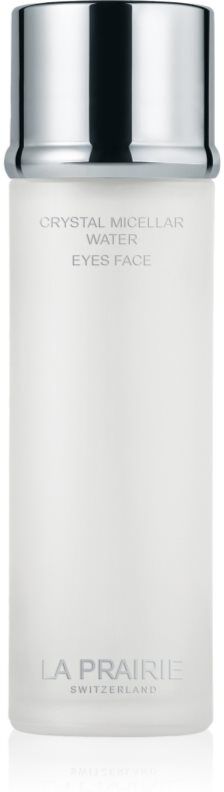
La Prairie Crystal Micellar Water makeup removing micellar water for face and eyes innovation 150 mlLa Prairie Crystal Micellar Water, 150 ml, Micellar Waters for Women, The La PrairieCrystal Micellar Water micellar water is enriched with tiny active particles that bind to any impurities and sebum on contact with the skin. Thanks to these particles, called micelles, this water ensures thorough foundation removal in a few minutes and without the need for pressure or friction on the skin. The micelles are so effective that they can handle even the most stubborn waterproof foundation. Characteristics: cleans pores deeply removes even stubborn makeup keeps skin balanced How to use: Apply enough of the product to a cotton wool pad and wipe gently to remove makeup and clean the skin. Use in the morning and evening or as needed. Shake well before use.127,00 £*Shipping: 3,99 £Secure redirect to the provider
-
How to calculate the enthalpy of fusion and vaporization?
The enthalpy of fusion and vaporization can be calculated using the equation Q = nΔH, where Q is the heat absorbed or released during the phase change, n is the number of moles of the substance, and ΔH is the enthalpy change. For the enthalpy of fusion, the equation becomes Q = nΔHfus, where ΔHfus is the enthalpy of fusion. For the enthalpy of vaporization, the equation becomes Q = nΔHvap, where ΔHvap is the enthalpy of vaporization. By measuring the amount of heat absorbed or released during the phase change and knowing the number of moles of the substance, the enthalpy of fusion and vaporization can be calculated. **
-
How do you calculate pressure using the enthalpy of vaporization?
To calculate pressure using the enthalpy of vaporization, you can use the Clausius-Clapeyron equation, which relates the vapor pressure of a substance to its enthalpy of vaporization. The equation is given by ln(P2/P1) = (-ΔHvap/R)(1/T2 - 1/T1), where P1 and P2 are the initial and final pressures, ΔHvap is the enthalpy of vaporization, R is the gas constant, and T1 and T2 are the initial and final temperatures. By rearranging the equation, you can solve for the pressure (P2) at a given temperature (T2) using the enthalpy of vaporization. **
-
What is the boiling point and what is the heat of vaporization?
The boiling point is the temperature at which a substance changes from a liquid to a gas at a constant pressure. It is the temperature at which the vapor pressure of the liquid equals the external pressure. The heat of vaporization is the amount of heat energy required to convert a unit mass of a liquid into a gas at its boiling point. It is a measure of the strength of the intermolecular forces in the liquid. **
-
How does the enthalpy of vaporization change with an isobaric volume increase?
When the volume of a substance is increased at constant pressure (isobaric conditions), the enthalpy of vaporization typically decreases. This is because the substance requires less energy to overcome the intermolecular forces and expand into the larger volume. As the molecules have more space to move around, the attractive forces between them become weaker, leading to a lower enthalpy of vaporization. Therefore, increasing the volume at constant pressure reduces the enthalpy of vaporization. **
* All prices are inclusive of VAT and, if applicable, plus shipping costs. The offer information is based on the details provided by the respective shop and is updated through automated processes. Real-time updates do not occur, so deviations can occur in individual cases. ** Note: Parts of this content were created by AI.