Buy liart.eu ?
We are moving the project
liart.eu .
Are you interested in purchasing the domain
liart.eu ?
domain@kv-gmbh.de · 0541-91531010
Buy liart.eu ?
Can isotopes occur naturally?
Yes, isotopes can occur naturally. Isotopes are variants of a particular chemical element that have the same number of protons but different numbers of neutrons. Many elements have naturally occurring isotopes, and they can be found in various proportions in nature. For example, carbon has three naturally occurring isotopes: carbon-12, carbon-13, and carbon-14. These isotopes are formed through natural processes such as radioactive decay and nuclear reactions. **
How do neutrons enter isotopes?
Neutrons enter isotopes through a process called neutron capture. Neutron capture occurs when a neutron is absorbed by the nucleus of an atom, resulting in the formation of a new isotope. This process can change the atomic mass of the isotope without affecting its chemical properties. Neutron capture plays a crucial role in nuclear reactions and the formation of heavy elements in stars. **


Similar search terms for Isotopes
Top-Angebote
Products related to Isotopes:
-
GlowBake Astarexin Earthing Fitted Sheet, Organic Cotton Grounding Bed Sheet With Conductive Silver Fiber For Nature Wellness grey queen Size us PlugExperience Natural Wellness with the Astarexin Earthing Fitted SheetTired of restless nights and constant fatigue The Astarexin Earthing Fitted Sheet is designed to reconnect you with Earths natural energy, promoting deeper sleep, reduced stress,...150,97 $*Shipping: 0,00 $Secure redirect to the provider
-
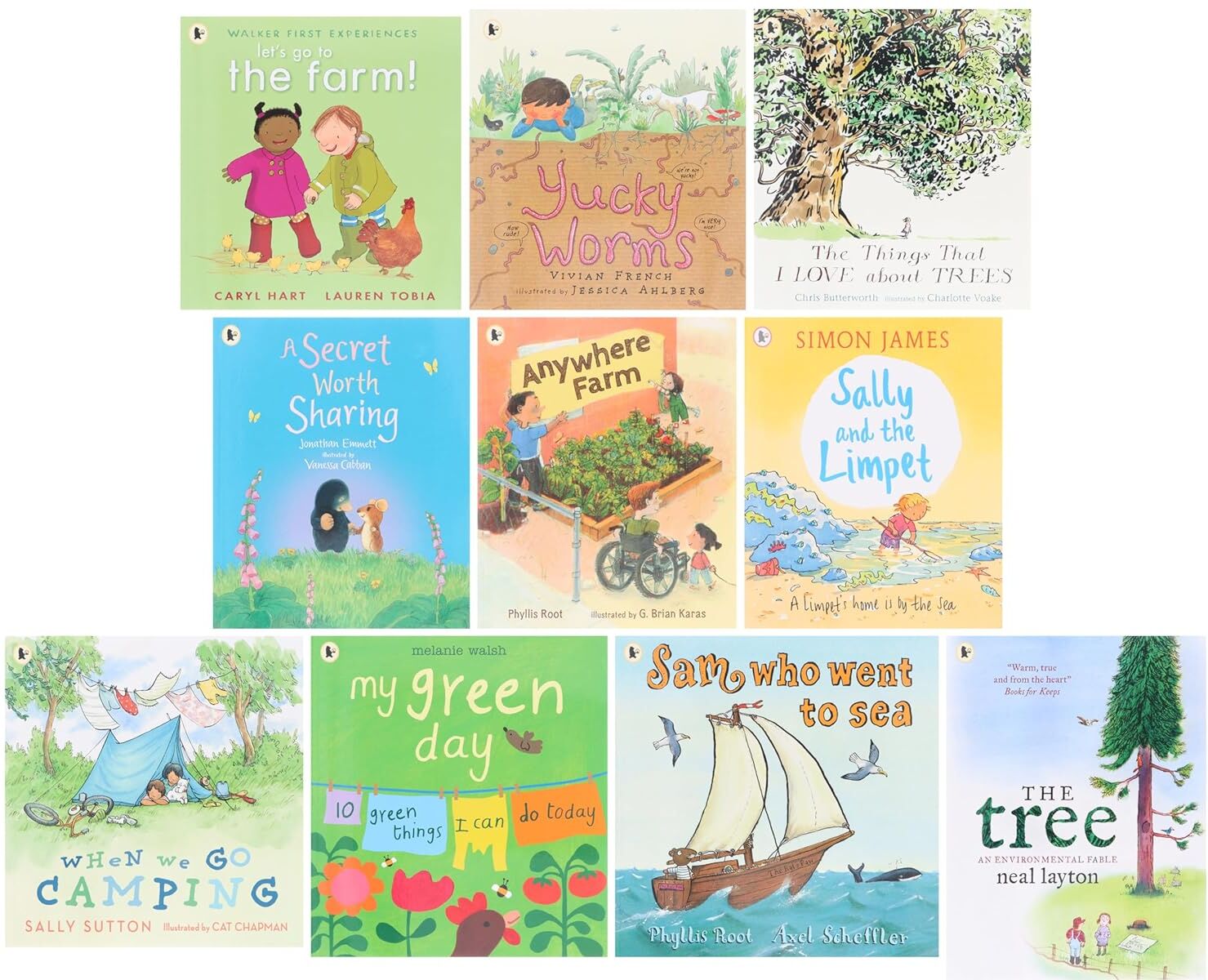
Walker Books UK Ltd The Great Outdoors 10 Picture Books Collection Set Nature, Trees, Wildlife, Farm, Camping & Adventure Stories for ChildrenThe Great Outdoors: 10 Wild and Wonderful Picture Books Collection Set Ignite a love of nature and outdoor adventure with The Great Outdoors – 10 Wild and Wonderful Picture Books Collection Set.This beautifully illustrated bundle introduces children to the magic of trees, farms, forests, wildlife, camping, seashores, and the joy of exploring the world around them. Packed with heartwarming stories, gentle messages, and rich nature themes, these books encourage imagination, curiosity, and a lifelong appreciation for the outdoors.Perfect for bedtime reading, early learning, classroom storytime, or little explorers who love adventure. Ideal for ages 3–7, preschoolers, nursery settings, and early readers. Titles in this Set: 1. The Things That I Love About Trees 2. The Tree 3. Sally and the Limpet 4. Anywhere Farm 5. When We Go Camping 6. A Secret Worth Sharing 7. Lets Go To The Farm! 8. Yucky Worms 9. My Green Day 10. Sam Who Went to Sea The Things That I Love About Trees A very young non-fiction picture book that looks at how a tree changes with the seasons, with charming illustrations by Charlotte Voake.Learn how a plum tree changes with the seasons in this charming... The Tree A delightful picture book with a wonderful twist which encourages young children to think about the way animals and humans live side by side.The tree. Home to a family of birds in their nest, squirrels... Sally and the Limpet When Sally pulls a limpet off a rock at the beach, it sticks to her finger – and nothing she, her family or her friends do can unstick it. Sally's teacher says that limpets live on the same rock for twenty years. So will Sally ever get the limpet off her finger? Anywhere Farm For an anywhere farm, here's all that you need: soil and sunshine, some water, a seed. When We Go Camping When we go camping, we bang in the pegs, Bang in the pegs, bang in the pegs. Guy ropes are tricky; they trip up your legs! A Secret Worth Sharing Mole's new friend, Mouse, is so special, he doesn't want to share her with anyone and decides to keep her secret. but some secrets are worth sharing. Lets Go To The Farm Let's go to the farm with Billy and Bee! There's SO much to do, and SO much to see! Baby lambs and guinea pigs, and chickens on the run, Let's get your wellies on and join in all the fun! Yucky Worms You can't be FREINDS with an earthworm... You can't even tell WHICH end is which! Or CAN you My Green Day Here are ten things we can all do to make every day a green day. Sam Who Went to Sea Sam, the river rat, dreams of going to sea. Day and night, whatever he is doing, his thoughts turn seawards.12,90 £*Shipping: 2,99 £Secure redirect to the provider
-
GlowBake Astarexin Earthing Fitted Sheet, Organic Cotton Grounding Bed Sheet With Conductive Silver Fiber For Nature Wellness white queen Size us PlugExperience Natural Wellness with the Astarexin Earthing Fitted SheetTired of restless nights and constant fatigue The Astarexin Earthing Fitted Sheet is designed to reconnect you with Earths natural energy, promoting deeper sleep, reduced stress,...150,97 $*Shipping: 0,00 $Secure redirect to the provider
-
GlowBake Astarexin Earthing Fitted Sheet, Organic Cotton Grounding Bed Sheet With Conductive Silver Fiber For Nature Wellness white king Size us PlugExperience Natural Wellness with the Astarexin Earthing Fitted SheetTired of restless nights and constant fatigue The Astarexin Earthing Fitted Sheet is designed to reconnect you with Earths natural energy, promoting deeper sleep, reduced stress,...150,97 $*Shipping: 0,00 $Secure redirect to the provider



-
How do radioactive isotopes decay?
Radioactive isotopes decay through the process of emitting radiation in the form of alpha particles, beta particles, or gamma rays. This emission of radiation occurs as the unstable nucleus of the isotope seeks to reach a more stable state. The type of decay that occurs depends on the specific isotope and its atomic structure. Over time, the decay process transforms the original isotope into a different element or a different isotope of the same element. **
-
What are isotopes in chemistry?
Isotopes are atoms of the same element that have the same number of protons but different numbers of neutrons. This means that isotopes have the same atomic number but different atomic masses. For example, carbon-12 and carbon-14 are isotopes of carbon. Isotopes can have different physical properties, such as different atomic masses, but they have similar chemical properties because they have the same number of protons and electrons. **
-
Are there isotopes, yes or no?
Yes, there are isotopes. Isotopes are atoms of the same element that have the same number of protons but different numbers of neutrons. This results in variations in atomic mass for a given element. **
-
How do radioactive isotopes decay exponentially?
Radioactive isotopes decay exponentially because the rate of decay is proportional to the amount of the isotope present. This means that as time goes on, the amount of the isotope decreases at an increasingly rapid rate. The decay is described by the exponential decay equation, which shows that the amount of the isotope remaining decreases by a constant fraction over equal intervals of time. This exponential decay behavior allows scientists to predict the amount of a radioactive isotope remaining at any given time. **

Could one describe isotopes like this?
Isotopes are atoms of the same element that have the same number of protons but different numbers of neutrons. This means that isotopes have the same chemical properties but different atomic masses. Therefore, one could describe isotopes as variations of the same element with different atomic masses due to differing numbers of neutrons. **
What are the three carbon isotopes?
The three carbon isotopes are carbon-12, carbon-13, and carbon-14. Carbon-12 is the most abundant and stable isotope, making up about 98.9% of all carbon atoms. Carbon-13 is a stable isotope, making up about 1.1% of all carbon atoms. Carbon-14 is a radioactive isotope with a half-life of about 5,730 years and is used in radiocarbon dating to determine the age of organic materials. **
Top-Angebote
Products related to Isotopes:
-
Uplifted Finds The Control Circle Archetype Social Worker Empowerment Canvas Executive Office & Wellness Sanctuary Decor 13 X 18 Cm No Frame"Inaugurate a grounding ""MindfulnessSanctuary"" energy in your environment with our ""Control Circle"" Archetype Canvas. This premium Social Worker and Mental Health professional print is the ultimate designer solution for creating a ""ClinicalModern"" or..."41,97 $*Shipping: 0,00 $Secure redirect to the provider
-
The Picturepedia Box 10 Books Collection Set by DK – Science, Nature & Educational Discovery Collection for KidsTitles in this set: The Picturepedia Box Science Protons to Planets Science Technology to Trains Nature Fossils To Flowers Nature Fish to Birds Nature Horses to Habitats Geography Coastlines to Climate Culture Art to Achitecture Culture Sports to Hobbies History Villages to Empires History Explorations to Espionage19,95 £*Shipping: 2,99 £Secure redirect to the provider
-
GlowBake Astarexin Earthing Fitted Sheet, Organic Cotton Grounding Bed Sheet With Conductive Silver Fiber For Nature Wellness grey queen Size us PlugExperience Natural Wellness with the Astarexin Earthing Fitted SheetTired of restless nights and constant fatigue The Astarexin Earthing Fitted Sheet is designed to reconnect you with Earths natural energy, promoting deeper sleep, reduced stress,...150,97 $*Shipping: 0,00 $Secure redirect to the provider
-
Walker Books UK Ltd The Great Outdoors 10 Picture Books Collection Set Nature, Trees, Wildlife, Farm, Camping & Adventure Stories for ChildrenThe Great Outdoors: 10 Wild and Wonderful Picture Books Collection Set Ignite a love of nature and outdoor adventure with The Great Outdoors – 10 Wild and Wonderful Picture Books Collection Set.This beautifully illustrated bundle introduces children to the magic of trees, farms, forests, wildlife, camping, seashores, and the joy of exploring the world around them. Packed with heartwarming stories, gentle messages, and rich nature themes, these books encourage imagination, curiosity, and a lifelong appreciation for the outdoors.Perfect for bedtime reading, early learning, classroom storytime, or little explorers who love adventure. Ideal for ages 3–7, preschoolers, nursery settings, and early readers. Titles in this Set: 1. The Things That I Love About Trees 2. The Tree 3. Sally and the Limpet 4. Anywhere Farm 5. When We Go Camping 6. A Secret Worth Sharing 7. Lets Go To The Farm! 8. Yucky Worms 9. My Green Day 10. Sam Who Went to Sea The Things That I Love About Trees A very young non-fiction picture book that looks at how a tree changes with the seasons, with charming illustrations by Charlotte Voake.Learn how a plum tree changes with the seasons in this charming... The Tree A delightful picture book with a wonderful twist which encourages young children to think about the way animals and humans live side by side.The tree. Home to a family of birds in their nest, squirrels... Sally and the Limpet When Sally pulls a limpet off a rock at the beach, it sticks to her finger – and nothing she, her family or her friends do can unstick it. Sally's teacher says that limpets live on the same rock for twenty years. So will Sally ever get the limpet off her finger? Anywhere Farm For an anywhere farm, here's all that you need: soil and sunshine, some water, a seed. When We Go Camping When we go camping, we bang in the pegs, Bang in the pegs, bang in the pegs. Guy ropes are tricky; they trip up your legs! A Secret Worth Sharing Mole's new friend, Mouse, is so special, he doesn't want to share her with anyone and decides to keep her secret. but some secrets are worth sharing. Lets Go To The Farm Let's go to the farm with Billy and Bee! There's SO much to do, and SO much to see! Baby lambs and guinea pigs, and chickens on the run, Let's get your wellies on and join in all the fun! Yucky Worms You can't be FREINDS with an earthworm... You can't even tell WHICH end is which! Or CAN you My Green Day Here are ten things we can all do to make every day a green day. Sam Who Went to Sea Sam, the river rat, dreams of going to sea. Day and night, whatever he is doing, his thoughts turn seawards.12,90 £*Shipping: 2,99 £Secure redirect to the provider
-
Can isotopes occur naturally?
Yes, isotopes can occur naturally. Isotopes are variants of a particular chemical element that have the same number of protons but different numbers of neutrons. Many elements have naturally occurring isotopes, and they can be found in various proportions in nature. For example, carbon has three naturally occurring isotopes: carbon-12, carbon-13, and carbon-14. These isotopes are formed through natural processes such as radioactive decay and nuclear reactions. **
-
How do neutrons enter isotopes?
Neutrons enter isotopes through a process called neutron capture. Neutron capture occurs when a neutron is absorbed by the nucleus of an atom, resulting in the formation of a new isotope. This process can change the atomic mass of the isotope without affecting its chemical properties. Neutron capture plays a crucial role in nuclear reactions and the formation of heavy elements in stars. **
-
How do radioactive isotopes decay?
Radioactive isotopes decay through the process of emitting radiation in the form of alpha particles, beta particles, or gamma rays. This emission of radiation occurs as the unstable nucleus of the isotope seeks to reach a more stable state. The type of decay that occurs depends on the specific isotope and its atomic structure. Over time, the decay process transforms the original isotope into a different element or a different isotope of the same element. **
-
What are isotopes in chemistry?
Isotopes are atoms of the same element that have the same number of protons but different numbers of neutrons. This means that isotopes have the same atomic number but different atomic masses. For example, carbon-12 and carbon-14 are isotopes of carbon. Isotopes can have different physical properties, such as different atomic masses, but they have similar chemical properties because they have the same number of protons and electrons. **
Similar search terms for Isotopes
-
GlowBake Astarexin Earthing Fitted Sheet, Organic Cotton Grounding Bed Sheet With Conductive Silver Fiber For Nature Wellness white queen Size us PlugExperience Natural Wellness with the Astarexin Earthing Fitted SheetTired of restless nights and constant fatigue The Astarexin Earthing Fitted Sheet is designed to reconnect you with Earths natural energy, promoting deeper sleep, reduced stress,...150,97 $*Shipping: 0,00 $Secure redirect to the provider
-
GlowBake Astarexin Earthing Fitted Sheet, Organic Cotton Grounding Bed Sheet With Conductive Silver Fiber For Nature Wellness white king Size us PlugExperience Natural Wellness with the Astarexin Earthing Fitted SheetTired of restless nights and constant fatigue The Astarexin Earthing Fitted Sheet is designed to reconnect you with Earths natural energy, promoting deeper sleep, reduced stress,...150,97 $*Shipping: 0,00 $Secure redirect to the provider
-
GlowBake Astarexin Earthing Fitted Sheet, Organic Cotton Grounding Bed Sheet With Conductive Silver Fiber For Nature Wellness grey king Size us PlugExperience Natural Wellness with the Astarexin Earthing Fitted SheetTired of restless nights and constant fatigue The Astarexin Earthing Fitted Sheet is designed to reconnect you with Earths natural energy, promoting deeper sleep, reduced stress,...150,97 $*Shipping: 0,00 $Secure redirect to the provider
-
Are there isotopes, yes or no?
Yes, there are isotopes. Isotopes are atoms of the same element that have the same number of protons but different numbers of neutrons. This results in variations in atomic mass for a given element. **
-
How do radioactive isotopes decay exponentially?
Radioactive isotopes decay exponentially because the rate of decay is proportional to the amount of the isotope present. This means that as time goes on, the amount of the isotope decreases at an increasingly rapid rate. The decay is described by the exponential decay equation, which shows that the amount of the isotope remaining decreases by a constant fraction over equal intervals of time. This exponential decay behavior allows scientists to predict the amount of a radioactive isotope remaining at any given time. **
-
Could one describe isotopes like this?
Isotopes are atoms of the same element that have the same number of protons but different numbers of neutrons. This means that isotopes have the same chemical properties but different atomic masses. Therefore, one could describe isotopes as variations of the same element with different atomic masses due to differing numbers of neutrons. **
-
What are the three carbon isotopes?
The three carbon isotopes are carbon-12, carbon-13, and carbon-14. Carbon-12 is the most abundant and stable isotope, making up about 98.9% of all carbon atoms. Carbon-13 is a stable isotope, making up about 1.1% of all carbon atoms. Carbon-14 is a radioactive isotope with a half-life of about 5,730 years and is used in radiocarbon dating to determine the age of organic materials. **
* All prices are inclusive of VAT and, if applicable, plus shipping costs. The offer information is based on the details provided by the respective shop and is updated through automated processes. Real-time updates do not occur, so deviations can occur in individual cases. ** Note: Parts of this content were created by AI.