Buy liart.eu ?
We are moving the project
liart.eu .
Are you interested in purchasing the domain
liart.eu ?
domain@kv-gmbh.de · 0541-91531010
Buy liart.eu ?
What are skew-symmetric matrices?
Skew-symmetric matrices are square matrices where the transpose of the matrix is equal to the negative of the original matrix. In other words, for a skew-symmetric matrix A, A^T = -A. This property implies that the diagonal elements of a skew-symmetric matrix must be zero. Skew-symmetric matrices are commonly used in mathematical applications such as in physics and engineering, particularly in the study of rotations and angular momentum. **
How do you determine the dimension of the vector space of skew-symmetric matrices?
The dimension of the vector space of skew-symmetric matrices can be determined by considering the number of independent parameters that define a skew-symmetric matrix. A skew-symmetric matrix has the property that its transpose is equal to the negative of the original matrix. This means that the diagonal elements must be zero, and the upper triangular and lower triangular elements are determined independently. Therefore, the dimension of the vector space of skew-symmetric matrices of size n is given by n(n-1)/2, as there are n(n-1)/2 independent parameters that define a skew-symmetric matrix. **

Similar search terms for Skew-symmetric
Top-Angebote
Products related to Skew-symmetric:
-
Our Voices: Neighborhood & Community Boxed SetFoster a feeling of belonging while building key reading skills with these colorful storybooks that spotlight a variety of neighborhoods and communities. The 10 charming stories feature characters from different cultural backgrounds who learn about...30,59 $*Shipping: 0,00 $Secure redirect to the provider
-
HARPERCOLLINS Creative Confidence by Tom & David Kelley – Unleashing Your Creative Potential & Innovation MindsetA powerful and inspiring book from the founders of IDEO, the award-winning design firm, on unleashing the creativity that lies within each and every one of us. Too often, companies and individuals assume that creativity and innovation are the domain of the ‘creative types’. But two of the foremost experts in innovation, design and creativity on the planet show us that each and every one of us is creative. In an entertaining and inspiring narrative that draws on countless stories from their work at IDEO, and with many of the world's top companies and design firms, David and Tom Kelley identify the principles and strategies that will allow us to tap into our creative potential in our work lives, and in our personal lives, allow us to think outside the box in terms of how we approach and solve problems. ‘Creative Confidence’ is a book that will help each of us be more productive and successful in our lives and in our careers.4,95 £*Shipping: 1,99 £Secure redirect to the provider


-
Why do the diagonal entries of a skew-symmetric matrix have to be zero?
The diagonal entries of a skew-symmetric matrix have to be zero because of the definition of a skew-symmetric matrix. A matrix A is skew-symmetric if it satisfies the condition A^T = -A, where A^T is the transpose of A. This means that the (i, i)th entry of A^T must be equal to the (i, i)th entry of -A, which implies that the diagonal entries of A must be zero. Therefore, the diagonal entries of a skew-symmetric matrix have to be zero by definition. **
-
What does industrial skew mean?
Industrial skew refers to the imbalance or uneven distribution of industrial activities within a particular region or sector. This skew can result in certain industries dominating the economy while others are underrepresented, leading to potential economic and social disparities. Industrial skew can impact factors such as employment opportunities, income distribution, and overall economic growth within a region. Efforts to address industrial skew often involve diversifying the industrial base, promoting new sectors, and supporting the growth of underrepresented industries. **
-
Which of the lines are skew?
The lines that are skew are the ones that do not lie in the same plane and do not intersect. In the given set of lines, lines 1 and 3 are skew because they do not lie in the same plane and do not intersect. Similarly, lines 2 and 4 are also skew because they do not lie in the same plane and do not intersect. **
-
When will the line be skew?
A line will be skew when it does not lie in the same plane as another line and they do not intersect. In other words, two lines are skew if they are not parallel and do not intersect. Skew lines can exist in three-dimensional space, where they are not contained within the same plane. **


When does the line become skew?
A line becomes skew when it does not lie in the same plane as another line. In other words, two lines are skew if they are not parallel and do not intersect. Skew lines are always in different planes and never meet, no matter how far they are extended. This is in contrast to parallel lines, which are always in the same plane but do not intersect, and intersecting lines, which lie in the same plane and do intersect. **
Is the square axis-symmetric, but not point-symmetric?
Yes, a square is axis-symmetric, meaning it has rotational symmetry around its center axis. However, it is not point-symmetric, as it does not have reflectional symmetry across any point within the shape. This is because a square does not have a point that can be reflected across to create a matching image. **
Top-Angebote
Products related to Skew-symmetric:
-
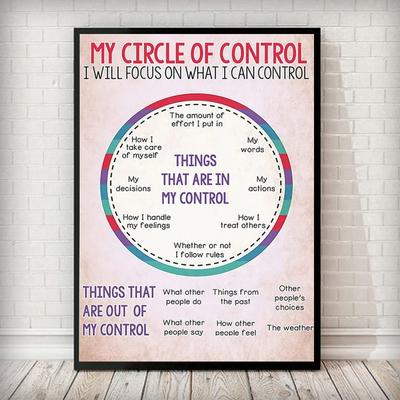
Uplifted Finds The Control Circle Archetype Social Worker Empowerment Canvas Executive Office & Wellness Sanctuary Decor 13 X 18 Cm No Frame"Inaugurate a grounding ""MindfulnessSanctuary"" energy in your environment with our ""Control Circle"" Archetype Canvas. This premium Social Worker and Mental Health professional print is the ultimate designer solution for creating a ""ClinicalModern"" or..."41,97 $*Shipping: 0,00 $Secure redirect to the provider
-
Our Voices: Neighborhood & Community Boxed SetFoster a feeling of belonging while building key reading skills with these colorful storybooks that spotlight a variety of neighborhoods and communities. The 10 charming stories feature characters from different cultural backgrounds who learn about...30,59 $*Shipping: 0,00 $Secure redirect to the provider
-
What are skew-symmetric matrices?
Skew-symmetric matrices are square matrices where the transpose of the matrix is equal to the negative of the original matrix. In other words, for a skew-symmetric matrix A, A^T = -A. This property implies that the diagonal elements of a skew-symmetric matrix must be zero. Skew-symmetric matrices are commonly used in mathematical applications such as in physics and engineering, particularly in the study of rotations and angular momentum. **
-
How do you determine the dimension of the vector space of skew-symmetric matrices?
The dimension of the vector space of skew-symmetric matrices can be determined by considering the number of independent parameters that define a skew-symmetric matrix. A skew-symmetric matrix has the property that its transpose is equal to the negative of the original matrix. This means that the diagonal elements must be zero, and the upper triangular and lower triangular elements are determined independently. Therefore, the dimension of the vector space of skew-symmetric matrices of size n is given by n(n-1)/2, as there are n(n-1)/2 independent parameters that define a skew-symmetric matrix. **
-
Why do the diagonal entries of a skew-symmetric matrix have to be zero?
The diagonal entries of a skew-symmetric matrix have to be zero because of the definition of a skew-symmetric matrix. A matrix A is skew-symmetric if it satisfies the condition A^T = -A, where A^T is the transpose of A. This means that the (i, i)th entry of A^T must be equal to the (i, i)th entry of -A, which implies that the diagonal entries of A must be zero. Therefore, the diagonal entries of a skew-symmetric matrix have to be zero by definition. **
-
What does industrial skew mean?
Industrial skew refers to the imbalance or uneven distribution of industrial activities within a particular region or sector. This skew can result in certain industries dominating the economy while others are underrepresented, leading to potential economic and social disparities. Industrial skew can impact factors such as employment opportunities, income distribution, and overall economic growth within a region. Efforts to address industrial skew often involve diversifying the industrial base, promoting new sectors, and supporting the growth of underrepresented industries. **
Similar search terms for Skew-symmetric
-
HARPERCOLLINS Creative Confidence by Tom & David Kelley – Unleashing Your Creative Potential & Innovation MindsetA powerful and inspiring book from the founders of IDEO, the award-winning design firm, on unleashing the creativity that lies within each and every one of us. Too often, companies and individuals assume that creativity and innovation are the domain of the ‘creative types’. But two of the foremost experts in innovation, design and creativity on the planet show us that each and every one of us is creative. In an entertaining and inspiring narrative that draws on countless stories from their work at IDEO, and with many of the world's top companies and design firms, David and Tom Kelley identify the principles and strategies that will allow us to tap into our creative potential in our work lives, and in our personal lives, allow us to think outside the box in terms of how we approach and solve problems. ‘Creative Confidence’ is a book that will help each of us be more productive and successful in our lives and in our careers.4,95 £*Shipping: 1,99 £Secure redirect to the provider
-
The Picturepedia Box 10 Books Collection Set by DK – Science, Nature & Educational Discovery Collection for KidsTitles in this set: The Picturepedia Box Science Protons to Planets Science Technology to Trains Nature Fossils To Flowers Nature Fish to Birds Nature Horses to Habitats Geography Coastlines to Climate Culture Art to Achitecture Culture Sports to Hobbies History Villages to Empires History Explorations to Espionage19,95 £*Shipping: 2,99 £Secure redirect to the provider
-
Which of the lines are skew?
The lines that are skew are the ones that do not lie in the same plane and do not intersect. In the given set of lines, lines 1 and 3 are skew because they do not lie in the same plane and do not intersect. Similarly, lines 2 and 4 are also skew because they do not lie in the same plane and do not intersect. **
-
When will the line be skew?
A line will be skew when it does not lie in the same plane as another line and they do not intersect. In other words, two lines are skew if they are not parallel and do not intersect. Skew lines can exist in three-dimensional space, where they are not contained within the same plane. **
-
When does the line become skew?
A line becomes skew when it does not lie in the same plane as another line. In other words, two lines are skew if they are not parallel and do not intersect. Skew lines are always in different planes and never meet, no matter how far they are extended. This is in contrast to parallel lines, which are always in the same plane but do not intersect, and intersecting lines, which lie in the same plane and do intersect. **
-
Is the square axis-symmetric, but not point-symmetric?
Yes, a square is axis-symmetric, meaning it has rotational symmetry around its center axis. However, it is not point-symmetric, as it does not have reflectional symmetry across any point within the shape. This is because a square does not have a point that can be reflected across to create a matching image. **
* All prices are inclusive of VAT and, if applicable, plus shipping costs. The offer information is based on the details provided by the respective shop and is updated through automated processes. Real-time updates do not occur, so deviations can occur in individual cases. ** Note: Parts of this content were created by AI.